Can you really get rid of tired-looking eyes in just 45 minutes? It might sound like a marketing gimmick or a headline from a fashion magazine, but in the world of modern aesthetic surgery, it is a clinical reality. If you are frequently met with comments like “Did you get enough sleep last night?” or “You look a bit drained today,” despite feeling perfectly rested, the issue isn’t your energy levels—it’s the weight of time resting on your eyelids.
At Merientis Health, located in the vibrant heart of Istanbul, Turkey, we witness this transformation daily. Upper eyelid surgery, or Blepharoplasty, is one of those rare procedures where a minor surgical touch leads to a monumental shift in how you see the world—and how the world sees you. It is not just about “vanity”; it is about reopening the window to your soul and aligning your outward appearance with your inner vitality.
The Anatomy of Tired Eyes: Why Does the Skin Sag?
To understand the solution, we must first understand the cause. The skin around our eyes is the thinnest and most delicate on the entire body. Because we blink thousands of times a day and use our eyes for every expression—from laughter to squinting in the Istanbul sun—this area is the first to show signs of aging.
As we reach our late 30s and 40s, the production of collagen and elastin begins to slow down. These are the proteins that keep our skin “snappy” and firm. When they weaken, the upper eyelid skin loses its structural integrity and begins to hood over the eye. In some cases, small pockets of fat that usually sit deep behind the eye begin to protrude forward, creating a puffy, heavy appearance.
Many of our patients at Merientis Health describe the same frustrations: “My eyeliner keeps smudging because my eyelid is folded,” or “I feel like I’m constantly lifting my eyebrows just to see better.” If this sounds familiar, your eyelids have become a “curtain” that needs to be drawn back.
The 45-Minute Miracle: What Happens During the Procedure?
The beauty of upper blepharoplasty lies in its simplicity and efficiency. At our clinic in Istanbul, we have refined this process to ensure maximum comfort and precision. Let’s walk through that 45-minute journey together:
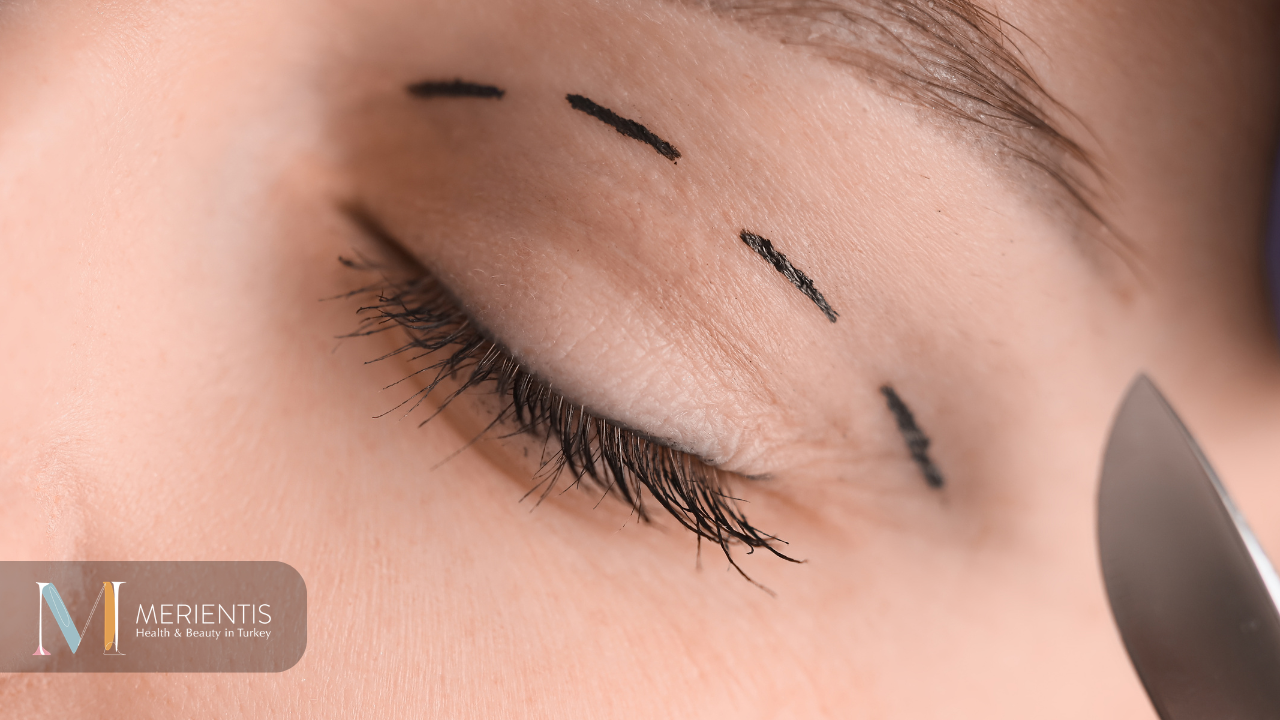
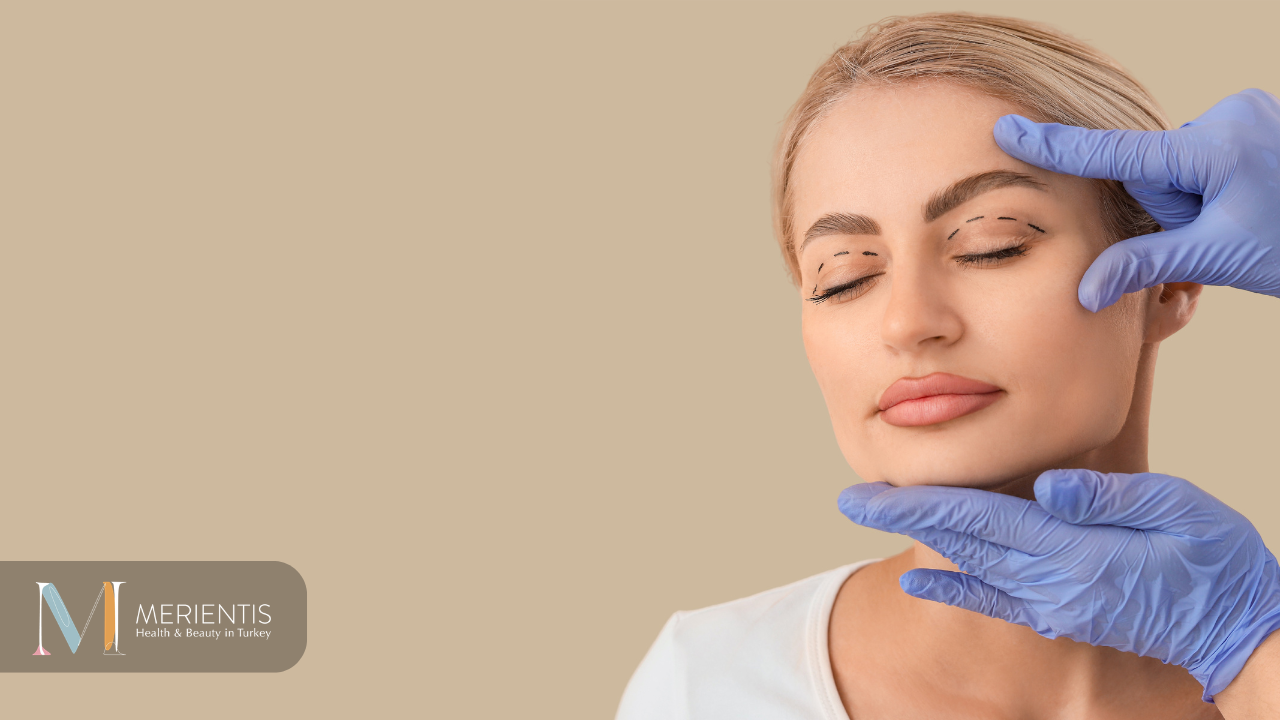
1. The Artistic Marking Before the surgery begins, our surgeon carefully marks the excess skin while you are in a seated position. This is perhaps the most critical part of the entire process. It’s an act of balance; we need to remove enough skin to provide a refreshed look, but not so much that the eye cannot close naturally. It’s a delicate dance of millimeters that requires the seasoned eye of a specialist.
2. Local Anesthesia and Comfort Most upper eyelid surgeries are performed under local anesthesia. You are awake, relaxed, and the area is completely numb. If you feel particularly anxious, we can provide light sedation to ensure you are in a “dream-like” state. Most patients are surprised to find that the numbing process is the only part they truly “feel,” and even that is over in seconds.
3. The Precision Incision A fine incision is made exactly within the natural crease of the upper eyelid. Through this tiny opening, the surgeon removes the pre-determined strip of excess skin and, if necessary, repositions or removes small amounts of fat.
4. The “Invisible” Stitch The incision is closed using sutures thinner than a human hair. Because the cut is hidden within the natural fold of the eyelid, the resulting scar is virtually invisible once healed. In Istanbul, we use advanced suturing techniques that minimize tension on the skin, ensuring the smoothest possible recovery.
Beyond Aesthetics: When Beauty Becomes a Functional Necessity
While most people seek eyelid surgery to look younger, there is a significant functional benefit that often goes unmentioned: the restoration of your visual field. When the upper eyelid skin hangs too low, it begins to block your peripheral vision. You might not even realize you are missing parts of the world until that “hood” is removed.
Furthermore, people with heavy eyelids often unconsciously use their forehead muscles (the frontalis muscle) to pull their eyelids up throughout the day. This leads to two unintended side effects: deep horizontal forehead wrinkles and chronic tension headaches by late afternoon. By correcting the eyelids, you effectively “relax” your forehead, often reducing the need for Botox in that area and eliminating those pesky end-of-day headaches. At Merientis Health, we view this as a holistic improvement to your quality of life.
Why Istanbul and Merientis Health?
Turkey has become the global epicenter for aesthetic surgery, and for good reason. Istanbul, in particular, attracts patients from the UK, Europe, and the Middle East who are looking for a combination of surgical mastery and high-tech medical facilities.
-
Surgical Dexterity: Turkish surgeons are renowned for their “natural-looking” results. In blepharoplasty, the goal is not to look “surprised” or “pulled,” but to look like a well-rested version of yourself. Our surgeons at Merientis Health have performed thousands of these procedures, giving them an unparalleled “feel” for tissue elasticity.
-
Cutting-Edge Technology: We utilize the latest surgical tools, including radiofrequency and laser-assisted techniques, to minimize bleeding and swelling. This means you can get back to enjoying the sights of Istanbul sooner.
-
Comprehensive Care: From the moment you land at the airport to your final follow-up, our team is with you. We don’t just treat eyes; we take care of people.
The Recovery Timeline: What to Expect After 45 Minutes
“Will I be able to see?” “Will I have to stay in a dark room for a week?” These are common concerns. The reality is much more manageable.
-
The First 48 Hours: You won’t have bandages over your eyes, only small, thin strips of tape over the incision sites. You will experience some swelling and perhaps minor bruising (similar to a light “black eye”). Applying cold compresses is your best friend during this stage.
-
Day 5 – The Reveal: You return to our Istanbul clinic to have your stitches removed. This is the “Aha!” moment. While there is still some residual swelling, you can already see the brightness in your eyes. At this point, most patients can apply light makeup and return to work or social activities.
-
The 1-Month Mark: The swelling has largely subsided, and the incision line is beginning to fade into a faint pinkish color that hides perfectly in your eyelid crease. Your friends will start asking if you’ve changed your skincare routine or if you’ve been on a long vacation.
The Art of Natural Results: Preserving Your Character
The biggest fear in eyelid surgery is the “operated look.” We’ve all seen celebrities who look perpetually startled. At Merientis Health, our “Red Line” is authenticity. We believe that your eyes should still look like your eyes.
Our approach focuses on preserving the natural shape of the eye while simply removing the “baggage” that time has added. Whether you have an almond-shaped eye or a more rounded structure, we respect that original geometry. We want you to look in the mirror and recognize the person you were ten or fifteen years ago.
Frequently Asked Questions (FAQ)
1. Is upper eyelid surgery permanent? The skin removed during the surgery is gone forever. However, your body will continue to age naturally. Most patients enjoy the results of a blepharoplasty for 10 to 15 years, and for many, it is a once-in-a-lifetime procedure. Maintaining a healthy lifestyle and protecting your skin from the sun will prolong the results.
2. Does the surgery hurt? During the procedure, you will feel no pain due to the anesthesia. Afterward, most patients describe the sensation as a “tightness” or “mild soreness” rather than sharp pain. Standard over-the-counter pain relief is usually more than enough for the first day or two.
3. Will people know I had surgery? If done correctly, the only thing people will notice is that you look “fresher.” Because the incision is hidden in the natural crease, there is no visible scar when your eyes are open.
4. How long do I need to stay in Istanbul for this procedure? We recommend staying in Istanbul for 6 to 7 days. This allows us to perform the surgery, monitor your initial healing, and remove your stitches before you fly back home.
5. Can I combine eyelid surgery with other procedures? Absolutely. Many of our patients choose to combine upper blepharoplasty with a brow lift or lower eyelid surgery (to remove bags under the eyes) for a more comprehensive rejuvenation. During your consultation at Merientis Health, we can discuss a plan that fits your goals.
6. When can I wear contact lenses again? Usually, you can return to wearing contact lenses about two weeks after the surgery, once the incisions have fully closed and the initial swelling has subsided.
Conclusion: Reclaim Your Radiance
Eyelid surgery is perhaps one of the most cost-effective and high-impact procedures in the world of aesthetics. It’s a 45-minute investment that pays dividends every time you look in the mirror or catch your reflection in a window. It’s about more than just skin; it’s about the confidence that comes with looking as energetic as you feel.
Are you ready to say goodbye to the “tired” version of yourself and hello to a brighter, clearer future? At Merientis Health, we are here to guide you through every step of this journey in the beautiful setting of Istanbul, Turkey. Let us help you pull back the curtain and show the world the real you.