Becoming a mother is one of the most miraculous, transformative, and undoubtedly sacrificial journeys a woman can undertake. During this process, the changes your body undergoes can sometimes make you feel like a stranger to your own reflection. Many women, after becoming mothers or while dreaming of motherhood, wish to reshape their bodies, but a massive question mark always lingers in their minds: “Will getting breast implants prevent me from breastfeeding my baby?”
At Merientis Health, located in the heart of Istanbul, Turkey, we answer these anxious yet hopeful questions from women arriving from all corners of the world every single day. Today, we are putting this issue on the table, stripping away the urban legends and replacing them with medical facts and the sincerity of a trusted friend. If you want to have the voluminous breasts you’ve dreamed of while also ensuring you can healthily breastfeed your future baby, this guide was written specifically for you.
The Anatomy of Breast Implants: A Neighborly Relationship with Milk Ducts
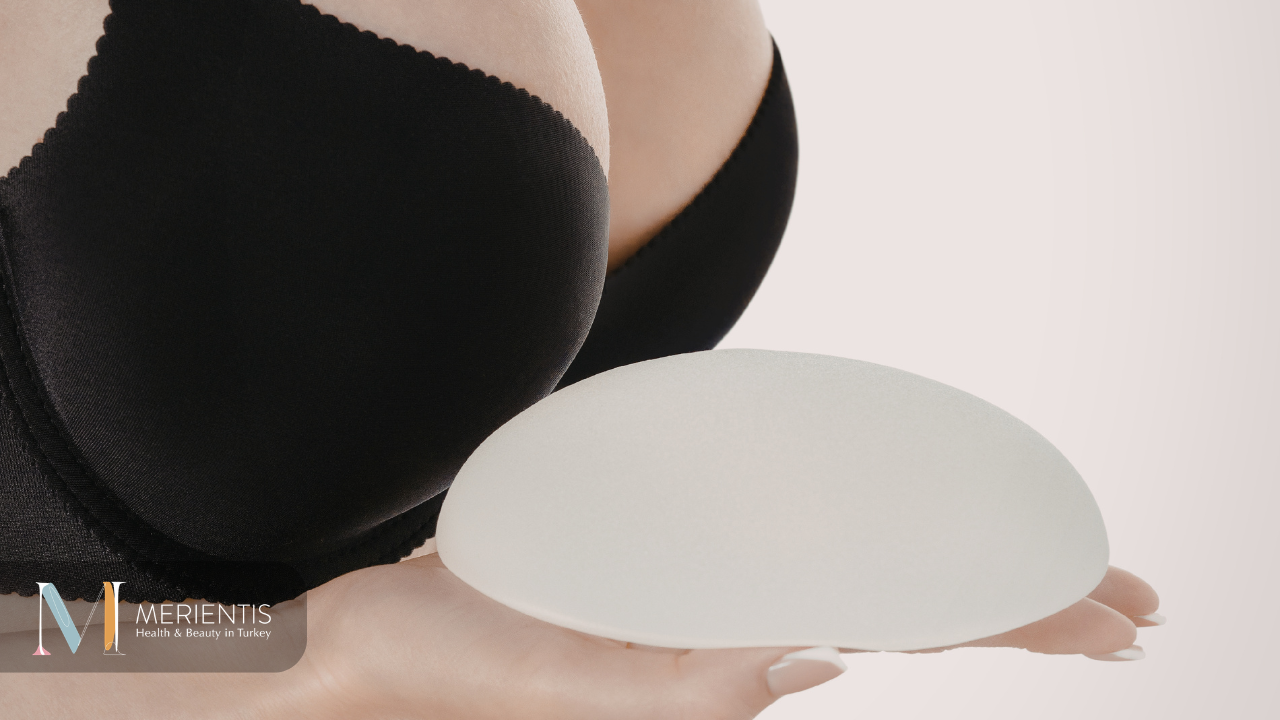
Let’s start with the basics. Many people mistakenly believe that a breast implant is placed inside the breast tissue itself—right in the middle of the milk ducts. If that were the case, yes, breastfeeding would be at serious risk. However, modern aesthetic surgery operates with an engineering mindset that respects your tissues and natural biological functions.
In the procedures we perform at our Istanbul clinic, we place the implant in one of two primary locations: either directly behind the breast tissue (subglandular) or completely behind the chest muscle (submuscular). If you notice, in both methods, the implant remains “behind” the milk ducts and the milk-producing glands (lobules).
What does this mean for you? When your baby begins to nurse, the milk ducts continue to perform their duty without ever coming into contact with the implant. The implant sits there only as a volume support; it never interferes with the production line (the glands) or the delivery route (the ducts). As Merientis Health surgeons, we approach this anatomy with the precision of a scientist and the sensitivity of an artist.
Debunking the “Silicone in Milk” Fear with Science
We know you ask out of that fierce maternal protection instinct: “What if the silicone leaks and my baby drinks it?” In the world of 20 or 30 years ago, this might have been a valid concern. But we are in 2026, and medical technology has reached an entirely different dimension.
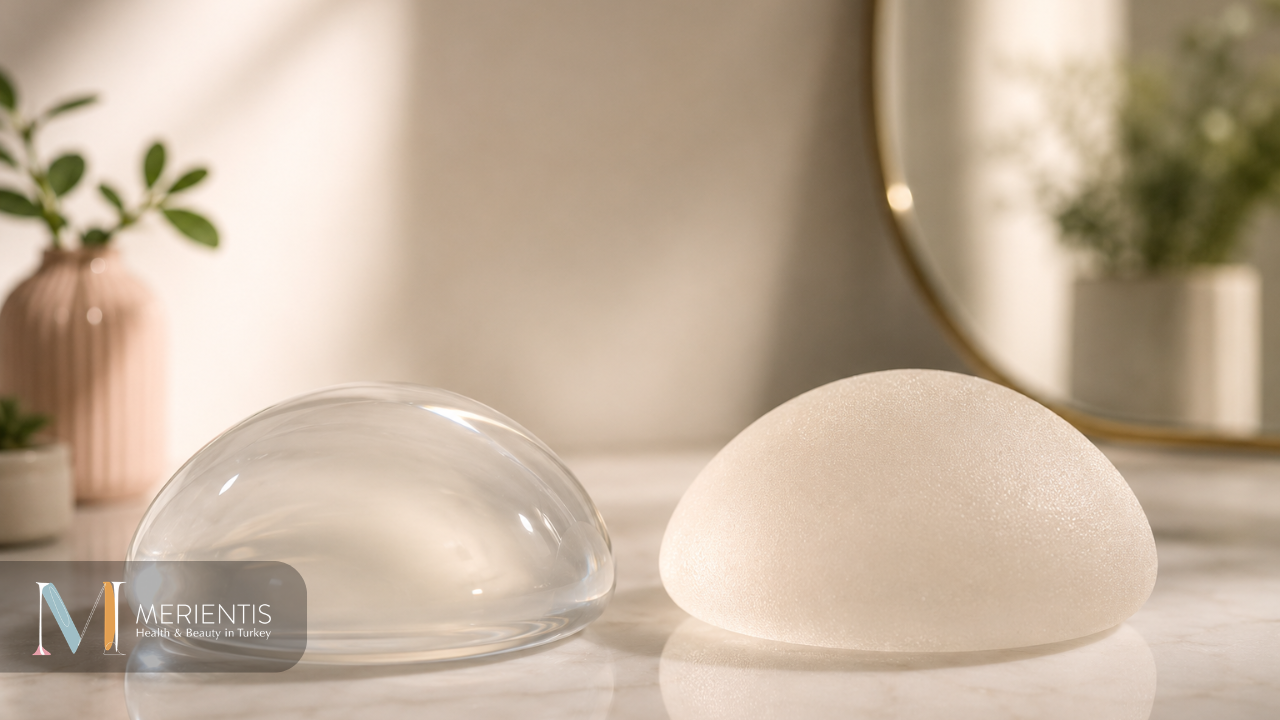
The new-generation “cohesive gel” implants we use today are often called “gummy bear” implants for a reason. Even if you were to cut the implant in half, the material inside does not flow, scatter, or leak. Therefore, it is medically near-impossible for silicone to seep into the milk ducts and reach your baby. In fact, scientific studies have repeatedly proven that the amount of silicone in the milk of mothers with implants is no higher than the amount found in cow’s milk or commercial infant formulas.
At Merientis Health in Turkey, we only use FDA-approved, world-renowned brands. Why? Because we know that the health of your future baby is just as sacred to us as your own health.
Choosing the Incision Site: A Critical Decision for Breastfeeding
When you decide on surgery, one of the most important details you will discuss with your surgeon is where the incision will be made. This is the “secret sauce” when it comes to breastfeeding success. Generally, there are three main incision sites: the inframammary fold (under the breast), the periareolar (around the nipple), and the transaxillary (armpit).
-
Inframammary Fold Incision: This is our preferred method at Merientis Health for patients who prioritize breastfeeding. By entering through the fold under the breast, the surgeon reaches the space behind the breast tissue directly. The risk of touching the milk ducts is virtually zero.
-
Periareolar Incision: While this is a great method for hiding scars, incisions made around the nipple carry a slight risk of damaging some of the milk ducts. If breastfeeding is your top priority, we will likely recommend the safer inframammary route during your consultation in Istanbul.
Regardless of the method chosen, we work with the millimeter-level precision that has made Turkey a global leader in plastic surgery. Our goal is to give you that stunning cleavage while protecting the most precious gift nature has given you: the ability to nurture.
Post-Pregnancy Breast Form: Does the Implant Change or the Body?
Another common misunderstanding is the idea that “breastfeeding ruins my implants.” In reality, it isn’t the implants that “ruin”; it is the natural breast tissue that changes. During pregnancy and breastfeeding, the breast tissue expands, stretches, and then suddenly shrinks once nursing ends. This “balloon effect” can lead to skin sagging.
If you already have implants, the implants themselves will stay exactly where they are. However, because the skin over them has loosened, you might experience some sagging in the overall breast form. In most cases, you don’t need to change the implants; a simple “breast lift” (mastopexy) touch-up is enough to restore everything to its former glory.
So, why Merientis Health? Because we don’t just plan for today. we plan for ten years from now, for the day you give birth, and for the stages of natural aging. While you are being renewed by the energy of Istanbul, we are securing your aesthetic future.
A Success Story in Istanbul: Secure Transformation with Merientis Health
Why do thousands of women choose Istanbul, Turkey, and specifically Merientis Health for breastfeeding-friendly breast aesthetics? The answer lies not just in our high-tech equipment, but in the boutique, personalized service we offer.
Istanbul has become the heart of the aesthetic world. However, at Merientis Health, we don’t view our patients as “cases”; we view them as “human stories.” We understand the heartbeat of a mother or a mother-to-be who is worried about breastfeeding. With our pre-operative simulations, we plan the implant placement in the safest possible way, and we offer 24/7 support throughout your recovery.
Our professional care process, blended with world-famous Turkish hospitality, prepares you for this great change not just physically, but mentally. As you heal in the cool breeze of the Bosphorus, you will find yourself completely free from the fear of “Can I breastfeed my baby?”
How Long After Breastfeeding Can You Have Surgery?
If you currently have a baby and are breastfeeding, you will need to exercise a bit of patience. For the milk ducts to completely clear, for your hormones to balance out, and for the breast tissue to reach its “final” form, you should wait at least 6 months after you have completely stopped breastfeeding.
Why is this necessary? Because in a breast that is actively producing milk, the risk of infection is higher, and because the tissues are swollen with fluid (edema), it is difficult for a surgeon to achieve that perfect, permanent contour. At Merientis Health, we prefer to achieve the safest, most perfect result at the right time rather than rushing the process. The end of that patience is a magnificent beauty story starting in Istanbul.
Frequently Asked Questions (FAQ)
1. How long after getting implants can I get pregnant? We recommend waiting at least 6 months, ideally 1 year, after surgery for your body to recover from the stress of the procedure and for tissues to heal completely. After this period, there is no medical obstacle to pregnancy or breastfeeding.
2. Will there be a loss of sensation during implant placement? Does this affect breastfeeding? There may be a temporary loss of sensation or extreme sensitivity in the nipple after surgery. However, permanent loss of sensation is very rare in experienced hands. Even if some sensation is lost, this does not prevent milk production; it may only change the sensation of stimulation during nursing.
3. Can an implant rupture or shift during breastfeeding? No. Your baby’s nursing force is not strong enough to rupture an implant or move it out of place. Your implants are securely held by the muscle or tissue. Playing with the baby, holding them, or breastfeeding will not damage your implants.
4. Is submuscular or subglandular placement safer for breastfeeding? Both methods are compatible with breastfeeding. However, in submuscular (under the muscle) placement, the implant is further away from the breast tissue. For women with a high concern for breastfeeding, our surgeons in Istanbul often prefer this method.
5. I’m afraid my milk won’t be enough because of the implants. Is this possible? Milk supply is determined by your hormones and the capacity of your mammary glands, not the implant. Studies show that the milk supply of mothers with implants is nearly identical to those without. Feeling psychologically relaxed is the most important factor for your milk production.
6. How will my follow-ups be managed at Merientis Health in Istanbul? With our digital follow-up system, we are with you even after you return to your home country. We monitor your recovery through video consultations and answer any questions that might pop up when you enter the pregnancy or breastfeeding phase later in life.
Conclusion: You Can Have a Great Body and Be a Happy Mother
Life is made of choices. But in the world of modern aesthetic surgery, you no longer have to choose between “beauty” and “functionality.” With modern medicine, the expertise of Merientis Health, and the visionary perspective of Istanbul, you can have both.
The wonderful milk you give your baby when you hold them in your arms will be nourished by your love, independent of the silicons in your body. Loving yourself and feeling confident when you look in the mirror will make you a much happier mother. Remember, the energy a happy woman radiates is the most powerful healing force in the world.
If you are ready to start this journey, leave your worries behind, and achieve the look of your dreams, we are waiting for you in Istanbul as the Merientis Health family. Let’s open this new chapter together, safely and healthily.
What is your biggest hesitation regarding this topic? Share it with us in the comments, or reach out to our team immediately for a personalized consultation. Transformation is just one step away!