Fear of Nasal Packing After Rhinoplasty: The Truth About New-Generation Silicone Splints
“The myth says nasal packing removal will hurt a lot…”
If you are researching rhinoplasty, you have probably heard at least one frightening story about nasal packing. Someone says, “The surgery was fine, but removing the tampons was terrible.” Another person says, “I was more afraid of the packing than the operation.” And suddenly, before you even think about the shape of your nose, you start worrying about one thing: “Will it hurt when they remove the nasal tampons?”
This fear is very common. In fact, for many people considering nose surgery, nasal packing anxiety can become one of the biggest mental barriers before rhinoplasty.
But here is the important point: nasal packing is not what many people imagine from old stories. Surgical materials, techniques and postoperative care have changed over time. In many modern rhinoplasty and septoplasty cases, new-generation silicone nasal splints or soft silicone packs may be used instead of older-style gauze packing.
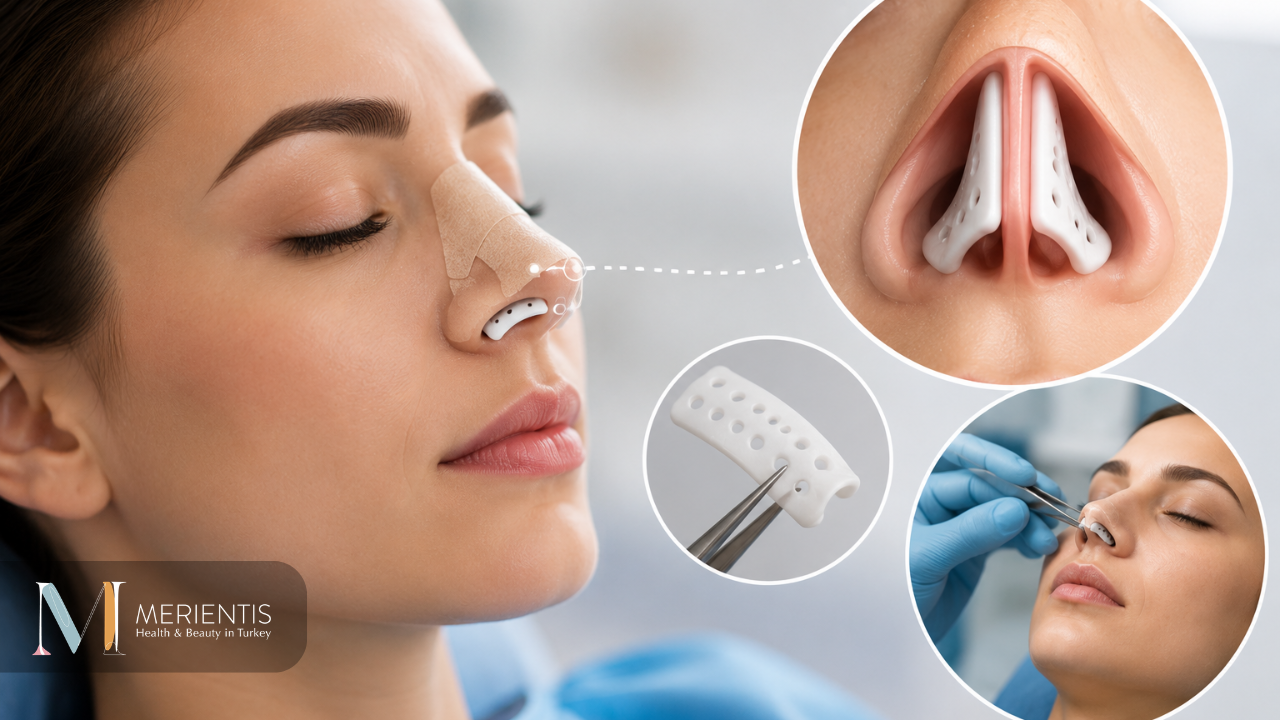
These silicone materials are generally smoother, more flexible and designed to be removed with less friction compared to traditional dry gauze packs. Some have small airway channels that may allow limited airflow while they are in place. Their removal is usually a short clinical step performed by the surgeon or medical team.
At Merientis Health in Istanbul, Turkey, patient education is an important part of rhinoplasty planning. If nasal packing or silicone splints are expected after surgery, the patient should understand why they are used, how long they may stay, what removal feels like and why the old “extremely painful tampon removal” stories do not always reflect current practice.
What Are Nasal Tampons After Rhinoplasty?
Nasal tampons, more accurately called nasal packing or internal nasal splints, are materials placed inside the nose after certain nasal surgeries. They may be used after rhinoplasty, septoplasty, functional nose surgery or combined aesthetic-functional procedures.
Their purpose can vary depending on the surgery. In some cases, they help support the septum. In others, they may help reduce bleeding, stabilize internal tissues or prevent unwanted tissue contact during the early healing period.
Not every rhinoplasty requires the same type of internal support. Some patients may have silicone splints. Some may have soft packing. Some may not need classic packing at all. The decision depends on the surgical technique, septum correction, mucosal condition, bleeding tendency and surgeon preference.
This is why it is not accurate to compare your expected recovery directly with someone else’s story. Your friend’s surgery, packing type, anatomy and healing process may be completely different from yours.
Why Are People So Afraid of Nasal Packing?
The fear usually comes from older experiences. In the past, traditional gauze packing was more commonly used. These packs could dry, stick to internal nasal tissues and create more discomfort during removal. People who experienced that kind of packing often described removal as unpleasant or painful.
Naturally, those stories spread. And because they are emotionally strong, they stay in people’s minds.
But medicine changes. Materials change. Techniques change. Modern silicone splints are not the same as old-style dry gauze packing. They are smoother, more structured and often easier to remove because they are less likely to stick in the same way.
Still, the fear is understandable. The nose is a sensitive area. After surgery, patients may already feel swollen, congested and nervous. Even the idea of something being removed from inside the nose can create anxiety.
This is why clear explanation matters. When patients know what to expect, fear usually becomes easier to manage.
What Are New-Generation Silicone Nasal Splints?
New-generation silicone nasal splints are soft, smooth medical-grade silicone materials used inside the nose after selected nasal surgeries. They are usually placed along the septum, the wall that separates the two nasal passages.
Unlike traditional gauze packing, silicone splints are not intended to fill the nose tightly with layers of fabric. They are designed to support the internal nasal structures while reducing unnecessary friction.
Some silicone splints include small breathing channels. These channels may allow a limited amount of airflow, although the nose can still feel blocked because of swelling, crusting and normal postoperative congestion.
The most important feature for many patients is that silicone splints are generally smoother and more slippery than older materials. When removed appropriately, they usually slide out more easily than traditional packing that has dried inside the nose.
That does not mean every patient feels absolutely nothing. Some may feel pressure, pulling, watering eyes or brief discomfort. But for many people, the fear they build in their mind is worse than the actual removal.
Are Silicone Nasal Splints the Same as Old Tampons?
No. Silicone nasal splints are not the same as old-style gauze tampons. This distinction is important because many fears come from confusing these two materials.
Traditional gauze packing was absorbent and could become dry or adherent. Removal could be uncomfortable because the material might rub against sensitive healing tissue. This is the source of many old “tampon horror stories.”
Silicone splints, on the other hand, are smoother and more structured. They are often coated with ointment or kept moist during the healing process. Because silicone does not behave like dry gauze, removal is typically more controlled.
Think of it like removing a dry bandage from skin versus removing a smooth, lubricated medical strip. The sensation is different. The experience is different. The emotional expectation should also be different.
At Merientis Health in Istanbul, Turkey, this difference should be explained clearly before surgery so patients do not enter the process with outdated fears.
Why Are Silicone Splints Used After Nose Surgery?
Silicone splints may be used for several reasons. The most common reason is internal support. After septum correction or functional rhinoplasty, the internal nasal tissues may need gentle stabilization during early healing.
They may also help prevent the two inner surfaces of the nose from sticking together. In some cases, they support the septum in a straighter position while healing begins.
Another reason is patient comfort compared to older packing styles. Silicone materials can provide internal support without creating the same dry, adherent packing experience associated with traditional tampons.
However, silicone splints are not used in exactly the same way for every patient. Some rhinoplasty cases may require them, while others may not. A patient who only has aesthetic reshaping without septum correction may have a different postoperative plan than someone who has significant deviation correction.
The right question is not “Will I definitely have tampons?” but “Will my surgical plan require internal splints or packing, and if so, what type?”
Does Removing Nasal Splints Hurt?
This is the question most patients really want answered.
In many cases, removing silicone nasal splints is much easier than patients expect. The process is usually short. The medical team may clean the area, remove any sutures holding the splints if present and gently slide the splints out.
Patients may feel pressure, a strange pulling sensation, watery eyes or a brief moment of discomfort. Some describe it as “weird but not painful.” Others say, “I expected something much worse.” Experiences vary, of course, but modern silicone splint removal is generally not the terrifying event described in old stories.
It is important not to promise that every patient will feel no pain at all. Pain tolerance, swelling, crusting, anxiety and surgical details can affect the experience. But the old idea that removal must be extremely painful is not accurate for many modern cases.
A calm explanation before removal also helps. When the patient knows it will be quick and controlled, the body relaxes more easily.
How Are Silicone Nasal Splints Removed?
The removal process is usually performed during a postoperative follow-up visit. The patient sits in an examination chair while the surgeon or medical team checks the nose.
If the silicone splints are secured with a small stitch, that stitch may be removed first. The inside of the nose may be gently cleaned if needed. Then the splints are carefully taken out with controlled movement.
The process usually takes a short time. It is not a second surgery. It does not normally require general anaesthesia. In many patients, the anticipation is more stressful than the removal itself.
After removal, the patient may feel immediate relief from the sense of internal blockage. However, the nose may still feel congested because swelling and crusting can continue during early recovery.
So, while splint removal may feel like a milestone, it is not the final stage of healing. The nose still needs time to settle.
Why Does the Nose Still Feel Blocked After Splints Are Removed?
Some patients think, “Once the tampons are removed, I will breathe perfectly.” This is not always realistic.
Even after silicone splints are removed, internal swelling can continue. The nasal lining may be sensitive. Crusting, dryness and healing tissue can still affect airflow. This is normal in the early postoperative period.
Breathing often improves gradually rather than instantly. Some days may feel more open, while others may feel congested. Temperature, humidity, sleeping position and internal swelling can all influence the sensation.
This does not mean something is wrong. Nasal healing is a process. The internal tissues need time, just like the external shape of the nose.
Patients should follow the surgeon’s cleaning, spray or care instructions carefully. Self-directed cleaning or aggressive nose blowing can irritate the healing tissues.
Is Nasal Packing Always Necessary After Rhinoplasty?
No. Nasal packing is not always necessary after rhinoplasty. The need depends on the surgical plan.
If the procedure includes septum correction, turbinate work, internal mucosal repair or more extensive functional correction, silicone splints or packing may be more likely. If the surgery is more limited and does not require internal stabilization, packing may not be needed.
Some surgeons prefer silicone splints routinely in certain cases. Others use them selectively. There is no one-size-fits-all answer.
This is why patients should ask during consultation: “Will I need internal splints or nasal packing after my surgery?” If the answer is yes, the next questions should be: “What type will be used? How long will they stay? How are they removed?”
At Merientis Health in Istanbul, Turkey, this kind of information helps patients feel more prepared and less anxious before surgery.
How Long Do Silicone Splints Stay Inside the Nose?
The duration varies depending on the procedure and the surgeon’s plan. In some cases, internal supports may be removed within a few days. In others, they may remain for about a week or longer.
There is no universal timeline that applies to everyone. Septum surgery, revision cases, mucosal healing and internal support needs may affect the duration.
Patients should not try to remove, move or adjust the splints themselves. Even if they feel annoying, they are placed for a reason. Pulling or touching them can cause bleeding, irritation or disruption of healing tissue.
If the patient feels severe pain, heavy bleeding, unusual smell, fever or significant discomfort, the clinic should be contacted. But mild pressure, blockage and awareness of the splints can be part of the expected experience.
What Does It Feel Like While Splints Are Inside?
Most patients describe a feeling of blockage, pressure or fullness inside the nose. Breathing through the nose may be limited, especially during the first days. The mouth may feel dry because the patient may breathe through the mouth more often.
There may also be mild oozing, crusting or a need for gentle cleaning according to medical instructions. Sleeping slightly elevated may be recommended in some cases to help with swelling.
The feeling is usually more uncomfortable than painful. Still, discomfort can feel stressful when the patient is not prepared. Knowing that this phase is temporary can make it easier to tolerate.
Some patients worry that they will panic because they cannot breathe fully through the nose. It can help to remember that mouth breathing is expected during the early period. The medical team can also explain how to manage dryness and comfort.
Why the “Tampon Horror Story” Is Outdated
The classic nasal tampon fear often belongs to an older surgical era. People remember stories of long gauze strips being pulled from the nose, dry packing causing friction or removal feeling traumatic.
Those stories may have been real for the people who experienced them. But they do not represent every modern rhinoplasty recovery.
Today, many surgeons use softer, smoother and more patient-friendly materials when internal support is needed. Silicone splints can reduce the fear associated with traditional packing. Surgical technique and postoperative care have also improved.
This does not mean recovery is completely effortless. Rhinoplasty still involves swelling, congestion, bruising in some patients, sleep adjustments and patience. But nasal packing removal should not be imagined as the worst part of the entire process by default.
Sometimes the myth is louder than the reality.
How Can Patients Reduce Anxiety Before Removal?
Anxiety before splint removal is very common. Even patients who are normally calm may feel nervous because the nose is sensitive and the experience is unfamiliar.
The first step is to ask questions before surgery. Knowing what type of internal support will be used reduces uncertainty. The second step is to ask what the removal usually feels like and how long it takes.
On the day of removal, breathing slowly and relaxing the shoulders can help. Tension can make any sensation feel stronger. Some patients close their eyes; others prefer to know each step before it happens. Both reactions are normal.
It is also helpful not to watch frightening online videos. Many of those videos are dramatic, outdated or not representative of your own surgical plan.
A calm clinical environment and a medical team that explains the process can make the experience much easier.
Can Silicone Splints Help Breathing During Recovery?
Some silicone splints have airway channels that may allow limited airflow. However, patients should not expect completely normal breathing while splints are inside.
Swelling, mucus, crusting and internal sensitivity can still make the nose feel blocked. Even with airway channels, the nose may not feel fully open.
The purpose of these channels is to support comfort, not to create perfect breathing immediately after surgery. Full breathing recovery depends on internal healing and reduction of swelling.
This is especially important for patients who have functional rhinoplasty or septum correction. The nose may need time before the improvement in airflow becomes clear.
Are Silicone Splints Used for Aesthetic or Functional Rhinoplasty?
They can be used in both, but they are especially common when internal nasal structures need support. For example, if septum deviation is corrected during rhinoplasty, silicone splints may help stabilize the septum during early healing.
In purely aesthetic rhinoplasty, internal splints may or may not be needed depending on the surgeon’s technique and the patient’s anatomy.
Functional rhinoplasty often focuses on breathing-related structures such as the septum, nasal valve and internal support. In such cases, internal stabilization can be more relevant.
The decision is not based on the label of the surgery alone. It is based on what is done inside the nose.
What Should Patients Avoid While Splints Are Inside?
Patients should avoid touching, pulling or trying to adjust internal splints. They should not blow their nose forcefully unless the surgeon permits it. Aggressive cleaning can irritate the healing tissue.
Strenuous exercise, bending forward, heavy lifting and activities that may increase bleeding risk may be restricted during the early recovery period. The exact instructions depend on the surgical plan.
Patients should also avoid smoking because it can negatively affect healing. Alcohol, certain medications or supplements may also be restricted depending on medical guidance.
The safest approach is simple: follow the instructions given by the surgeon. Rhinoplasty recovery is not the time to improvise.
What Happens After Splints Are Removed?
After splints are removed, the patient may feel lighter and less blocked. Some people notice that breathing feels better immediately. Others still feel congestion because swelling remains.
The inside of the nose may feel sensitive. There may be crusting or dryness. The surgeon may recommend saline sprays, gentle care or follow-up cleaning depending on the case.
The external nose may still look swollen. The internal healing and external shape continue to change over time. Rhinoplasty recovery is gradual.
Patients should continue avoiding trauma to the nose and should attend follow-up visits. Splint removal is an important step, but it is not the end of recovery.
Why Communication Before Surgery Matters
Many fears become smaller when they are clearly explained. Nasal packing fear is a perfect example. When a patient only hears old stories, the mind imagines the worst. But when the surgeon explains the material, purpose, timing and removal process, the fear becomes more manageable.
A good consultation should not dismiss the fear by saying, “Don’t worry.” It should answer the actual concern.
Will I have nasal packing?
Will it be silicone?
Will I be able to breathe through it?
When will it be removed?
How does removal feel?
What should I do if I feel uncomfortable?
These questions are practical and important. Patients deserve clear answers.
At Merientis Health in Istanbul, Turkey, rhinoplasty education should include both aesthetic and recovery-related details. A beautiful result is important, but feeling prepared for the healing process is also part of good care.
Why Is Rhinoplasty Recovery Frequently Researched in Istanbul, Turkey?
Istanbul, Turkey is widely researched for rhinoplasty and plastic surgery by both local and international patients. Many patients do not only search for nose shape, before-after photos or surgeon experience. They also search for recovery details.
Nasal packing fear is one of the most common recovery-related concerns. International patients, in particular, want to know what to expect before traveling: Will there be packing? When will it be removed? Will removal be painful? Can they travel after removal? How long will they feel congested?
These are reasonable questions. Traveling for surgery requires planning, comfort and trust.
Merientis Health in Istanbul, Turkey should approach this topic with transparent and realistic communication. Patients should understand that modern silicone splints can be very different from old-style nasal tampons, but individual recovery still varies.
What Questions Should You Ask Before Surgery?
Before rhinoplasty, patients should ask about nasal packing directly. There is no need to feel embarrassed about this fear. Surgeons hear it all the time.
Useful questions include:
Will I need nasal packing after surgery?
Will you use silicone splints or traditional packing?
Do the splints have breathing channels?
How long will they stay inside my nose?
How are they removed?
Will removal be painful or just uncomfortable?
What should I do if I feel blocked?
Can I breathe through my mouth safely during early recovery?
When can I travel after splint removal?
What symptoms should make me contact the clinic?
These questions help transform fear into information. And information usually makes recovery feel less intimidating.
Conclusion: Modern Silicone Splints Are Not the Old Nasal Tampon Myth
The fear of nasal packing removal is real, but many old stories do not reflect modern rhinoplasty care. New-generation silicone nasal splints are smoother, more flexible and generally designed for more comfortable removal compared to traditional dry gauze packing.
This does not mean the process feels like nothing for everyone. Some patients may feel pressure, pulling, watery eyes or brief discomfort. But the idea that nasal tampon removal must be extremely painful is often an outdated myth.
At Merientis Health in Istanbul, Turkey, rhinoplasty recovery should be explained clearly before surgery. If silicone splints are used, the patient should know why they are placed, how long they remain and what removal usually feels like.
“The tampons will hurt terribly when they come out” is one of the most persistent myths in nose surgery. The truth is more balanced: modern materials and careful removal can make the process much more tolerable than many patients expect.
If nasal packing fear is holding you back from rhinoplasty, the healthiest step is not to rely on old stories. Ask your surgeon directly. The answer may be much less frightening than the myth.
Frequently Asked Questions
Are nasal tampons still used after rhinoplasty?
In some cases, internal nasal support may still be used after rhinoplasty, especially when septum correction or functional nasal surgery is performed. However, many modern cases use silicone splints rather than old-style gauze packing.
Are silicone nasal splints painful to remove?
Silicone nasal splint removal is usually short and often easier than patients expect. Some people may feel pressure, pulling, watery eyes or brief discomfort, but the experience varies from person to person.
Are silicone splints the same as old nasal packing?
No. Silicone splints are smooth, flexible medical materials. Traditional gauze packing could dry and stick more easily, which is why older packing removal stories often sound more painful.
Why are silicone splints used after rhinoplasty?
They may help support the septum, stabilize internal tissues, reduce unwanted tissue contact and assist early healing after selected nasal surgeries.
Can I breathe while silicone splints are inside?
Some silicone splints have airway channels, but breathing may still feel limited because of swelling, mucus and crusting. Mouth breathing is common during the early recovery period.
How long do nasal splints stay in after surgery?
The duration varies depending on the surgical plan. Some are removed within a few days, while others may stay longer. The exact timing should be explained by the surgeon.
Can I remove nasal splints myself?
No. Patients should never remove or adjust nasal splints themselves. Removal should be performed by the surgeon or medical team during a follow-up visit.
Is nasal congestion normal after splint removal?
Yes. Even after splints are removed, swelling, crusting and internal healing can continue to affect breathing. Airflow usually improves gradually.
Is nasal packing always necessary after rhinoplasty?
No. Not every rhinoplasty requires nasal packing or internal splints. The need depends on septum correction, internal nasal work, bleeding control and the surgeon’s technique.